

There is only one place in Valencia where you can see lemurs playing, sunbathing and jumping among the Madagascar trees. Bioparc Valencia is a very special place to see lemurs in an area without barriers and perfectly themed. Lemurs are endemic to Madagascar and are highly threatened, mainly due to habitat destruction and hunting.
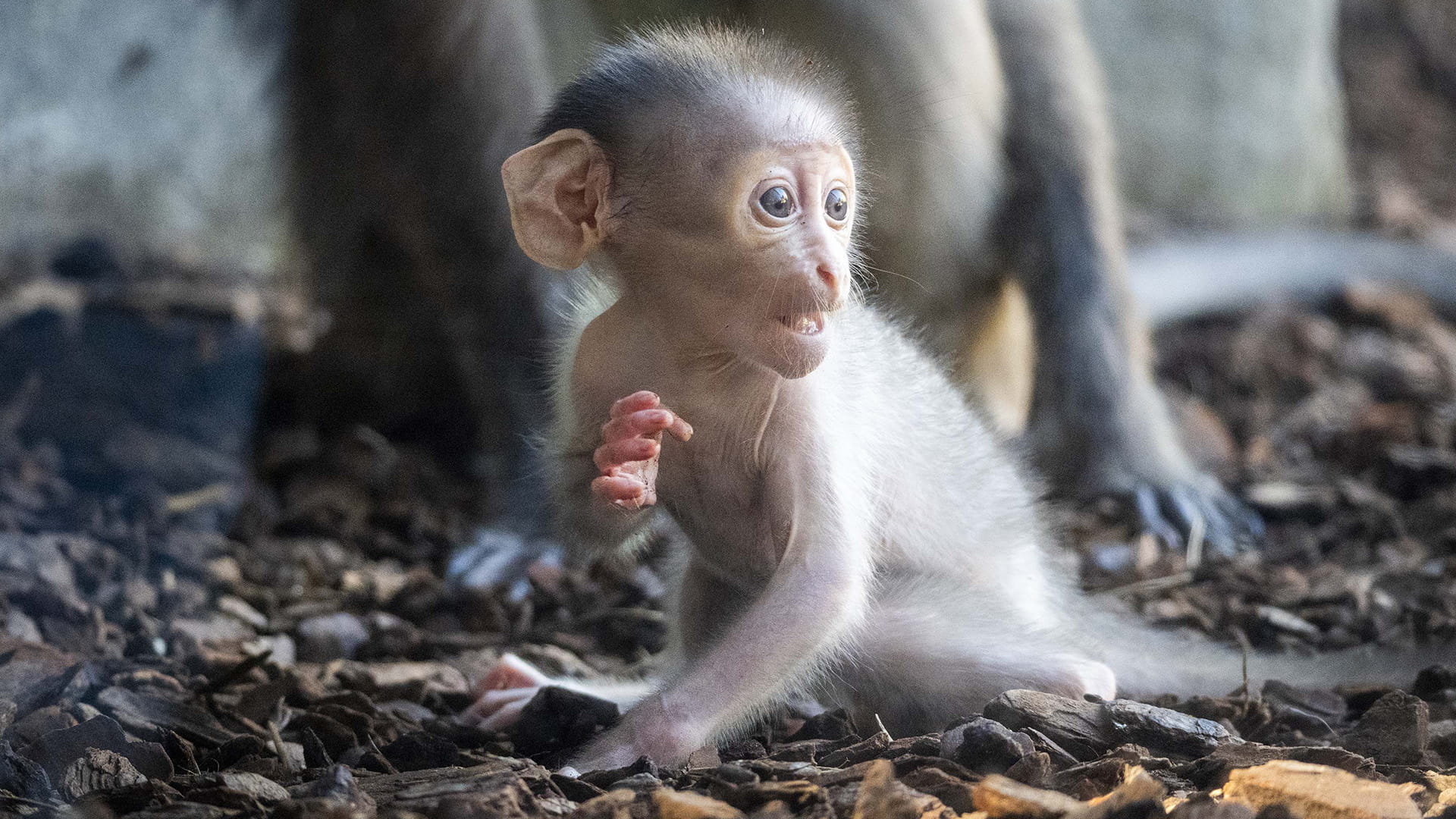
Last Tuesday, April 24, the Madagascar Forests of Bioparc Valencia welcomed the first ring-tailed lemur calf this spring into their family.. Kanga, as the mother is called, was the first female to give birth.
Kanga She is 8 years old and arrived at Bioparc Valencia in 2007. She is a female with experience as a mother, since this is not the first time she has reproduced. Now We can see her protecting her little calf while it clings firmly to her belly.
In this primate endemic to Madagascar, that is, it can only be found in this place. They live in the south and southwest of this exotic island, in dry forest habitats. These animals usually have one calf per birth or at most twins, they feed on fruits, leaves, flowers, herbs and, occasionally, insects.

We can distinguish this species by its long black and white ringed tail, which can measure up to 60 cm in length. They are arboreal and terrestrial animals, although they spend most of their time on the ground, staying active mainly in the morning.. That is why at Bioparc Valencia visitors enjoy seeing them or taking photos of them while they play or sunbathe.
The main threats to this species are habitat destruction and hunting. Its wide distribution means that it is not in as critical a situation as other species of lemurs, however its habitat is increasingly being lost due to human settlements and the pressure of agriculture on the forests and jungles of Madagascar.
It is a very territorial species and, as a curiosity, they use their tail to disperse their scent to mark their territory, by rubbing the tail with the glands on their forearms and then moving the tail from side to side. A very natural behavior that can be seen in Bioparc.