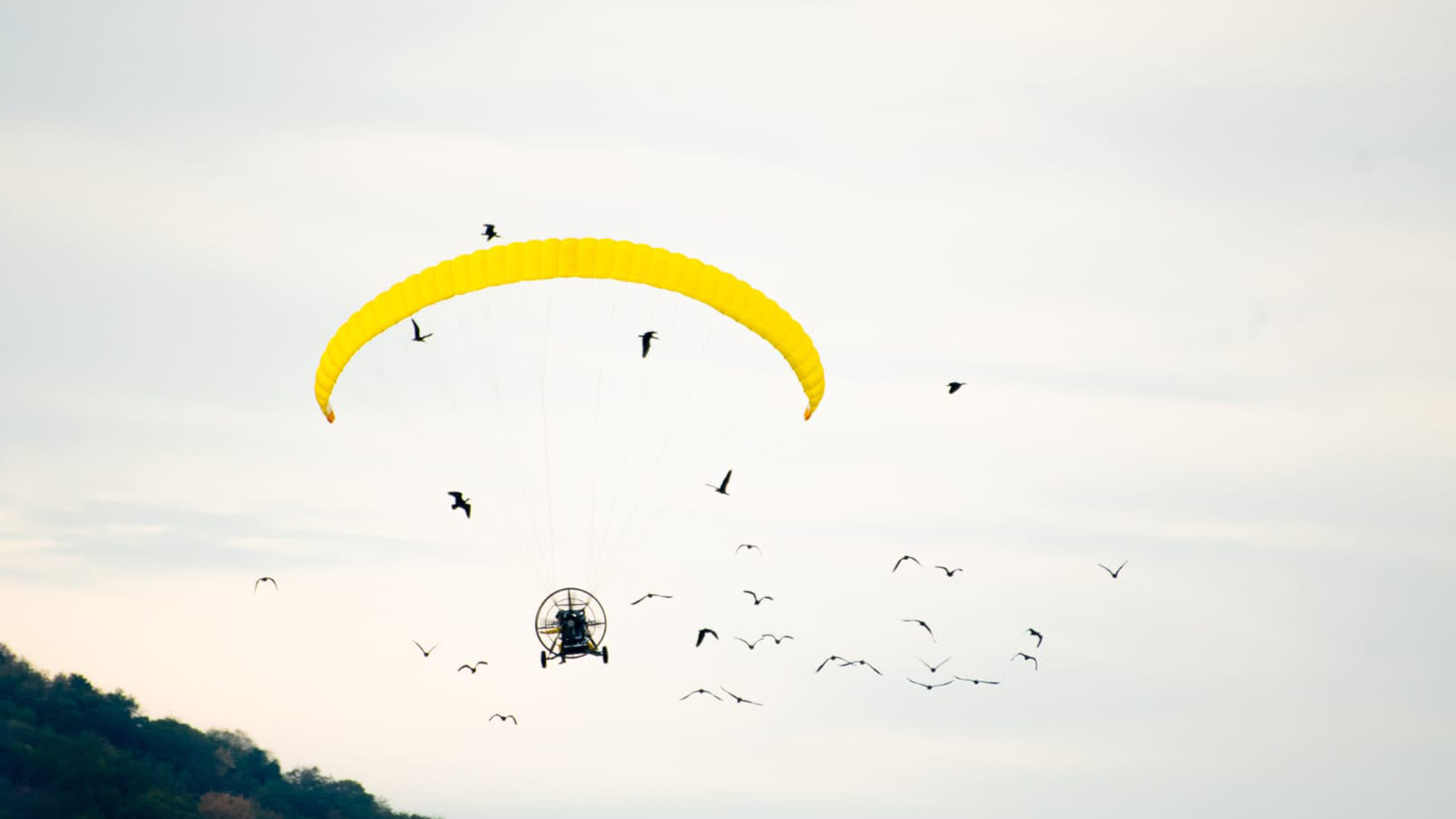

For the first time, Spain will be the destination of this important hermit ibis conservation project where adoptive human mothers traveling in ultralights teach the 2.300 km route that the young hand-raised birds must remember on their wintering journeys.
This week an impressive device has begun through which 35 juveniles of the precious species hermit ibis (Geronticus the hermit), They will migrate from Germany to Spain guided by their adoptive human mothers who fly in ultralights. A dangerous journey lasting more than a month to travel 2.300 kilometers flying over several countries and crossing the Pyrenees and which aims to reintroduce this bird to Europe, where it became extinct in the 700th century, leaving only about XNUMX specimens in Morocco.

For the first time our country will be the destination of this international conservation action and BIOPARC Valencia will be the support point at its rest stop in the Valencian Community. Following this spectacular action allows you to see it almost live. beautiful images of this particular alliance between people and animals.
Video: BIOPARC Valencia collaborates in the LIFE project for the reintroduction of the hermit ibis birds.
The ability to join forces between institutions and the tenacity of people to protect nature, in recent years is also generating hopeful news. If the Iberian lynx is the flagship in this sense, there are many other species that require our attention to survive and, in this case, to recover a space that they should never have lost. He hermit ibis It is one of them and even with controlled breeding of chicks, much of the difficulty in their recovery comes from the necessary migratory movements.

Human technology has made it possible to overcome our inability to fly and, put at the service of preserving biodiversity, has managed to promote piloted routes so that babies learn and memorize the routes. In this way, with European funds, a first LIFE project to reintroduce birds and establish migratory colonies between the northern Alps and Italian Tuscany. Now a second LIFE initiative, in collaboration with the Eremita project led by the Jerez de la Frontera zoo, has established a new route that, according to specialists, may be the ideal one.
At its Levantine stop, BIOPARC will support animal food management. The participation of different institutions and specialists has led to this successful strategy of reintroduction into nature that generates beautiful images.
Just a few days ago from Binningen airfield (Germany) This unique caravan formed by the chicks hatched at Rosegg Zoo (Austria) and a team of about 20 people between the ground administration and the two ultralight planes with their crew members. The distant destination is Vejer de la Frontera (Cádiz) where they will join a sedentary “Andalusian” colony with which it is not related and which is very important to strengthen and guarantee the future of the hermit ibis in Europe. The Valencian Community and its wetlands are an essential passage area on migratory routes and within a few weeks it is planned that a stage will be established on our lands. BIOPARC Valencia will carry out the necessary reinforcement and assistance work here by storing and distributing specialized food for birds.

The Hermit Ibis or Northern Bald Ibis is in serious danger of extinction, just one step away from being considered in a critical situation on the IUCN (International Union for Conservation of Nature) Red List. BIOPARC Valencia hosts a colony of Sacred Ibis (Threskiornis aethiopicus), much better known among the population for its frequent presence in Egyptian culture.