
Concentrating the birth of the offspring of the same flock in a few days is a survival strategy of many species.
In less than 10 days two Grant's zebras have been born in BIOPARC Valencia and, in both cases, from the next morning they could already be seen in their enclosure in the Sabana, instinctively following the rest of the herd. Like other herbivores, from the first moment the young are capable of standing, walking and even running if necessary, for example, due to the existence of predators. In the Valencian park they show this restless character with games and running around, although they remain protected by the group and frequently suckle from their mothers' udders.

As soon as they are born, the stripes of zebras are dark brown and white and, as the days go by, they begin to have their unmistakable black and white. This feature allows the public to distinguish the babies even if they were born a few days apart. Each zebra also has a unique stripe pattern, like a fingerprint, although it is much less noticeable to the naked eye.
It is common for zebra babies to have such a short difference in time and it has already happened in previous years in the Valencian park. This is because they usually have their babies between spring and summer, synchronizing births as a natural herd protection technique. In this way they protect their young as a group. increasing the probability de species survival.
At BIOPARC Valencia this natural behavior is reproduced and from the first moment the zebra foals are in public view.

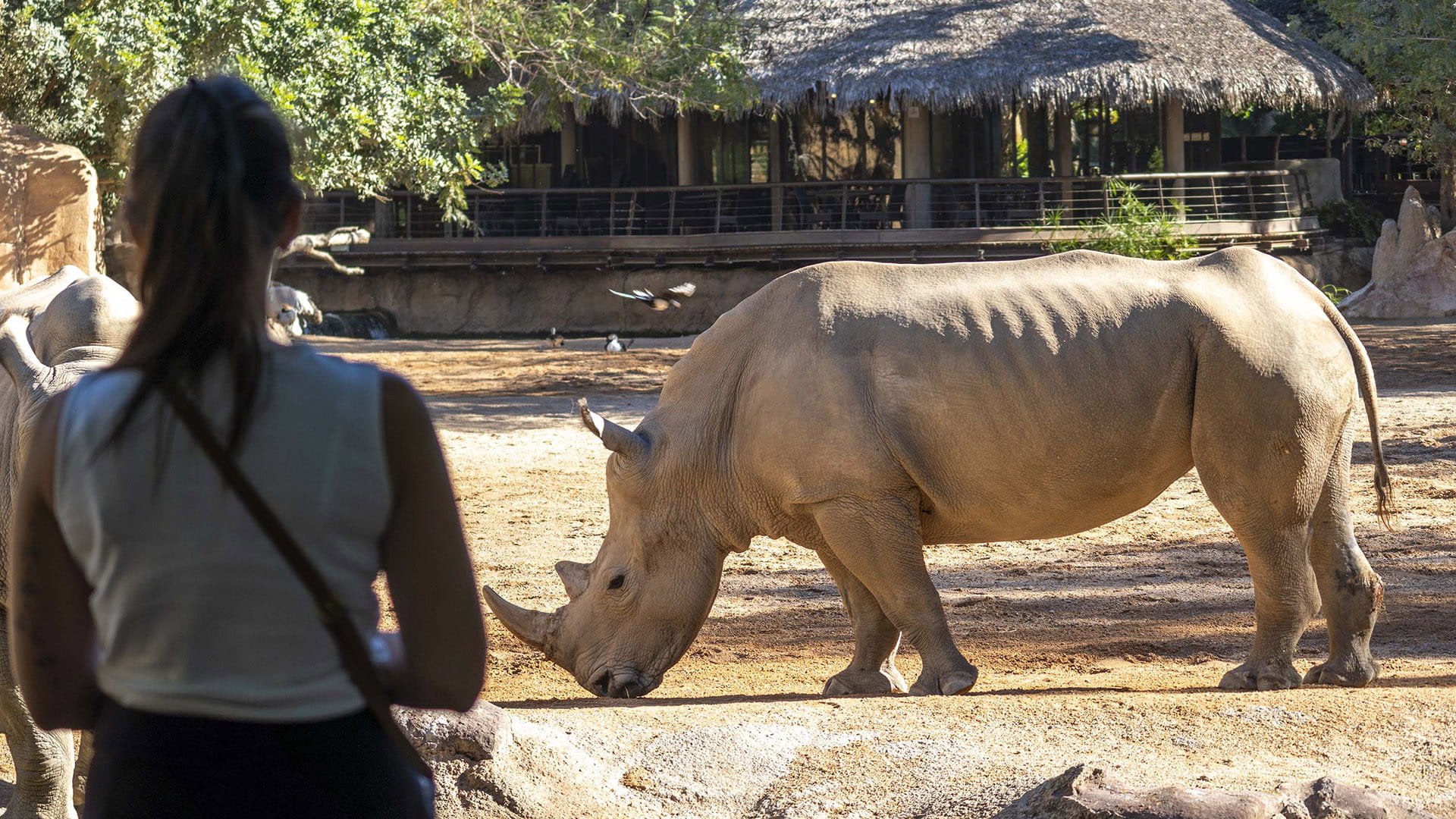
The group of zebras that inhabit the African Savannah of BIOPARC Valencia is made up of one male, three females, and two offspring, A male born on June 27 and the last one on July 5, whose sex is still unknown. They live in a multispecies enclosure along with rhinos, ostriches, marabous and ibis, which approach with caution and curiosity to welcome the new inhabitants.
Females can give birth to their first calf from the age of 3 and their gestation period lasts practically 12 months; usually only one foal is born per birth. In males the reproductive period does not usually begin until they are 5 or 6 years old.
This subspecies of Grant's zebra is found in the IUCN Red List (International Union for Conservation of Nature) in a state of least concern, although the trend indicates that its population is declining. With a life expectancy of around 38-40 years, its habitat is savanna and herbaceous plains from sea level to altitudes of more than 4.000 meters. Because they need to drink daily, they stay no more than half a day's walk from water sources. Their diet includes grass, hard stems and, sometimes, leaves or bark of trees and bushes. They require a large amount of food, so it is not unusual for them to spend around 20 hours a day grazing.