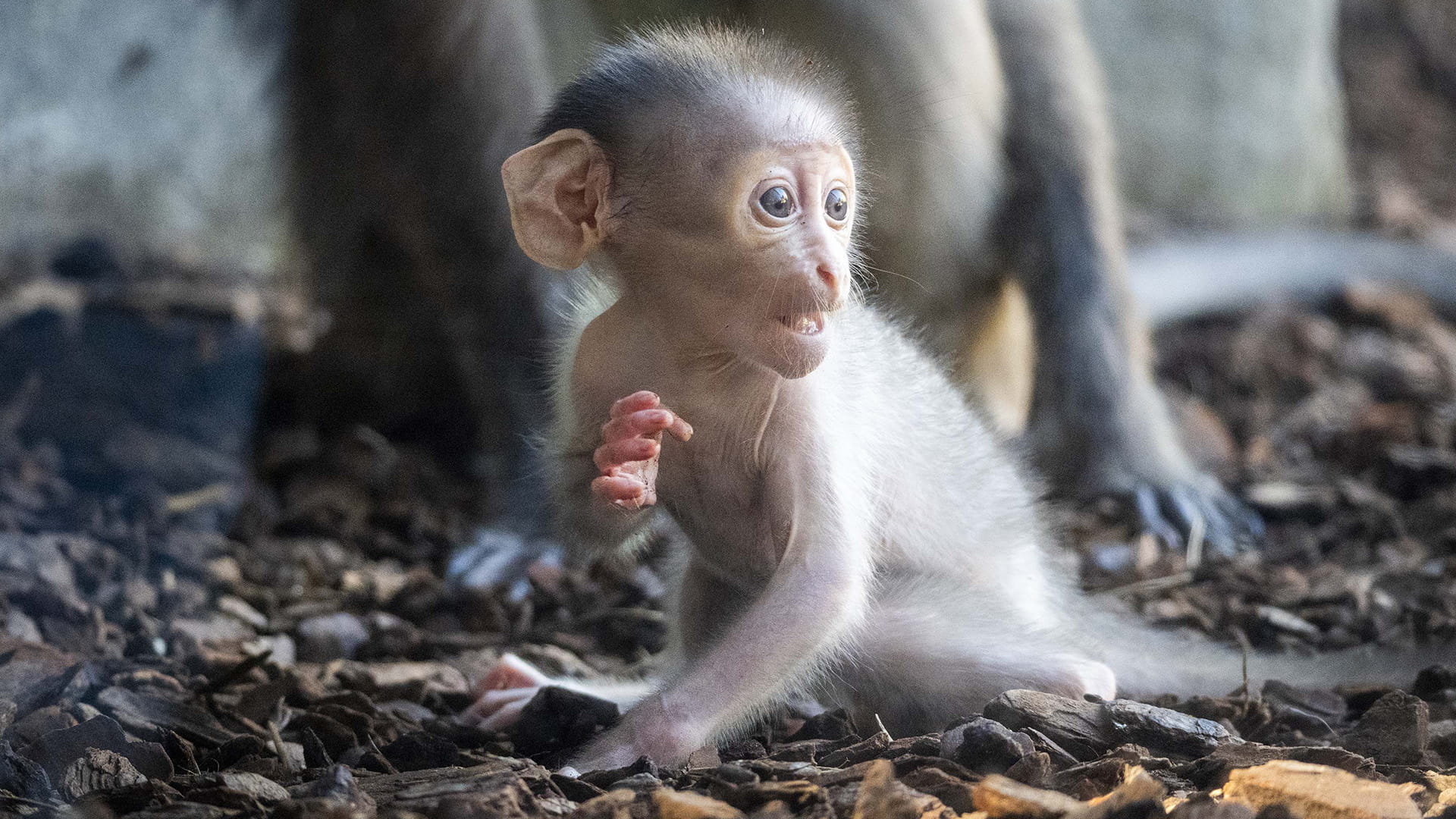

Bioparc Valencia registers new births with the reproduction of two different species of lemurs. Visitors can now see the babies in the outdoor enclosure.

Bioparc Valencia continues expanding his large family and receiving new members with the births of various species of lemurs, animals endemic to Madagascar and in danger of extinction. During this spring you can see numerous babies, a fact that reflects the good living conditions of the park's animals and their correct adaptation in groups.
Bioparc Valencia is the the only center where we can walk among 6 different species of lemurs. On this occasion, two species have reproduced, the red-bellied lemur and the ring-tailed lemur. This last case is worth highlighting, since two females have given birth to twins. It is especially interesting to see how the females jump among the visitors with the two small babies clinging to their chest.
The red-bellied lemur It is dark brown. It usually lives in the treetops where it spends much of its time, although it also goes down to the ground to collect fruits and hunt invertebrates. Additionally, it takes nectar from flowers and eats leaves from more than 70 different tree species. They usually carry out their activity both during the day and at night. They live in groups made up of a couple and their offspring, just like a traditional family. Both the male and the female participate in caring for the litter. The mother will transport her for the first weeks of life, as can already be seen in the park, and from that moment on the father will be in charge.

The ring-tailed lemur It has a long tail as if it were sheathed with numerous rings; hence its name. This species is more terrestrial habits than other species. It is found in different types of forest within its distribution area, from dry and deciduous forests to gallery forests, where its populations are most abundant. Depending on the season, they preferentially eat leaves, flowers, herbs or fruits.

Unlike the red-bellied lemur, This is a social species that lives in groups of up to 20 individuals. Females remain in their natal group and are dominant over males. Normally they give birth to a single calf or twins, as has happened in Bioparc Valencia.
It is important to add that new births are expected soon by these small primates that inhabit the area of Madagascar, where We can see how they happily jump and run around their enclosure among the visitors. Characteristic of Bioparc Valencia, a great Open Nature experience.